
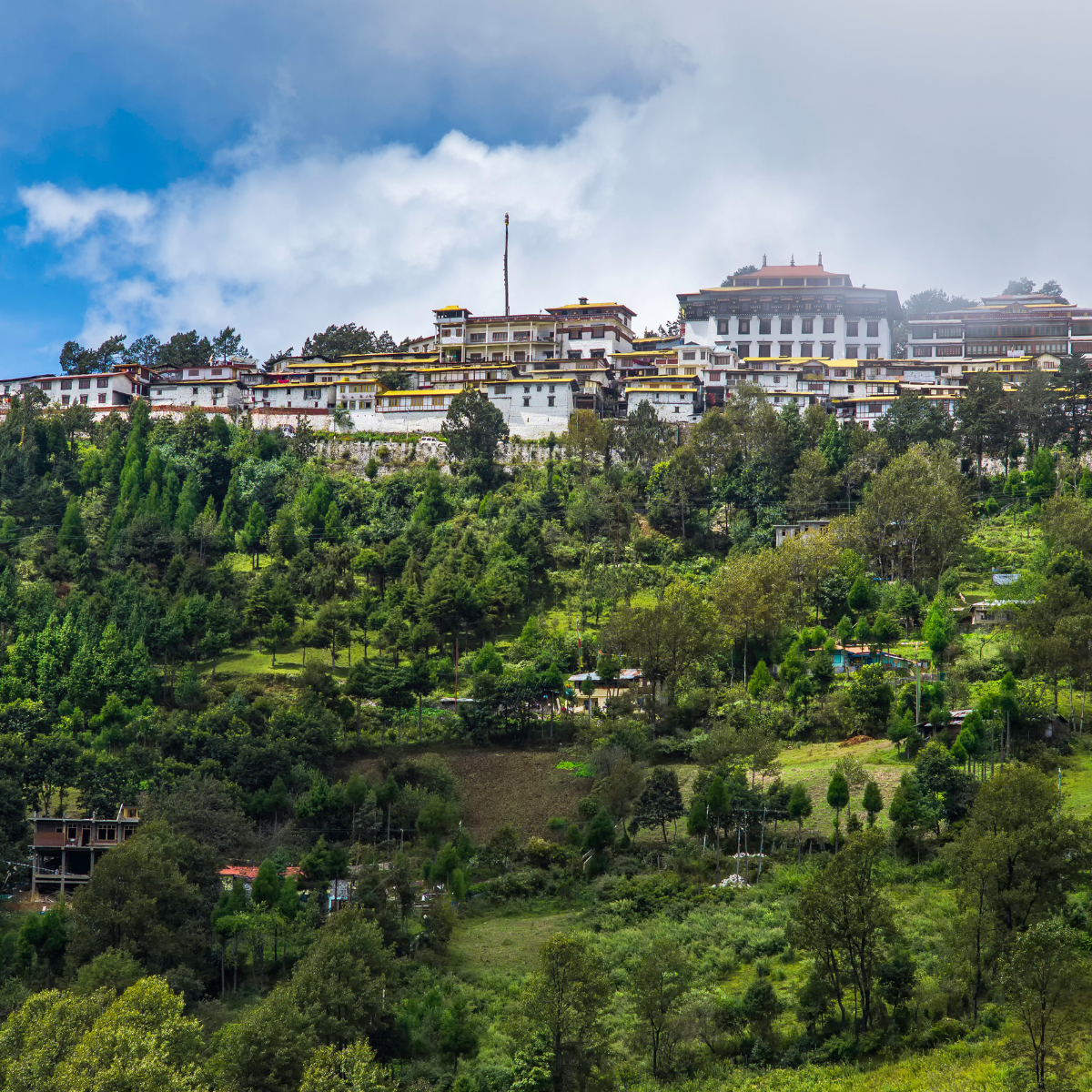
I didn’t plan to “find myself” in Tawang.
That wasn’t the intention.
I just knew I needed to leave — not dramatically, not permanently — just long enough to hear my own thoughts without them being interrupted every few seconds by notifications, traffic, or urgency.
The Tawang Circuit in Arunachal Pradesh wasn’t on my bucket list in bold letters. It sat quietly in the background for years, like a place that waits until you’re ready. Looking back now, I think it knew before I did.
The Long Road Out of Familiarity
The journey began from Guwahati, early in the morning. The kind of early where the city hasn’t fully woken up, and everything feels suspended — chai stalls setting up, sleepy headlights, half-packed bags.
At first, the road was forgiving. Wide stretches, green hills, polite turns. I was relaxed. Chatty. Still very much myself.
That changed as the terrain started tightening.
Somewhere after the plains faded, the roads narrowed into something more demanding. Landslide-prone stretches. Sharp bends. Long silences where even music felt intrusive. My phone lost network — not suddenly, but gradually, like it was letting go gently.
By the time we reached Bomdila, the tiredness wasn’t just physical. It was the kind of fatigue that comes from constant movement — the realization that I hadn’t truly stopped in a long time.
That night, wrapped in heavy blankets, I listened to the wind press against the windows. No scrolling. No messages waiting. Just cold air and stillness. I slept deeper than I had in weeks.
Dirang: The First Pause
We reached Dirang the next day.
Dirang doesn’t announce itself. It doesn’t impress immediately. It simply exists — quietly, confidently — between mountains and a river that seems to mind its own business.
That morning, I stepped outside with a cup of tea. The air was sharp, but clean. The kind that wakes your lungs before your thoughts. Mist floated lazily above the valley, and for a long moment, no one spoke.
I didn’t feel like checking the time.
I didn’t feel like planning the next stop.
That’s when it hit me — this place was slowing me down without asking permission.
Later, as we drove out, I caught myself staring out of the window longer than usual. Not trying to capture anything. Just watching the world move at its own pace. Dirang didn’t leave a dramatic mark, but it softened something inside me. And I didn’t know yet how much I needed that.
Sela Pass: Where the Body Learns Before the Mind
I had seen photos of Sela Pass. Everyone has.
Snow walls. Blue skies. A lake frozen into stillness.
Nothing prepared me for how it felt.
The moment we stepped out of the car, the cold hit — not romantically, not gently. It was sharp, almost disciplinary. My fingers numbed within minutes. Breathing felt different, like my lungs were negotiating with the altitude.
I remember laughing suddenly — not because something was funny, but because the body reacts strangely when it’s overwhelmed.
Sela Pass doesn’t let you pretend you’re in control.
You move slower. Speak less. Respect more.
Standing there, surrounded by white and wind, I realized how much of life I spend rushing through comfort. Here, discomfort demanded presence. And in that demand, something honest surfaced.
Arriving in Tawang: Letting Go of Momentum
By the time we reached Tawang, I was exhausted in a way sleep alone couldn’t fix.
The town was quieter than I expected. No chaos. No urgency. Just simple buildings, prayer flags, and people going about their routines without performance.
That evening, I stayed in.
The altitude was doing its work. My head felt heavy. My body needed rest. And for once, I listened. I didn’t feel guilty for doing nothing. That felt new.
Tawang Monastery: A Morning That Stayed With Me
I visited Tawang Monastery early in the morning.
The air was biting. My steps echoed softly on cold stone. Inside, monks chanted — low, rhythmic, unhurried. Butter lamps flickered gently, as if even fire moved slower here.
I sat down without knowing how long I would stay.
I didn’t pray.
I didn’t ask for answers.
I just listened.
And for the first time in a long while, my thoughts didn’t interrupt each other. There was no mental to-do list forming in the background. Just breath. Sound. Presence.
Some places don’t demand belief. They offer space.
This was one of them.
Madhuri Lake: Beauty That Feels Heavy
At Sangestar Tso (Madhuri Lake), I felt something unexpected.
The lake was stunning — no doubt. The water calm. The mountains distant. But the dead tree trunks emerging from the surface gave the place a strange heaviness.
I didn’t feel like talking.
I didn’t feel like taking too many photos.
It felt like a place that reminded you that beauty and loss often coexist — quietly, without explanation.
I stood there longer than planned, letting that realization sink in.
Bum La Pass: Silence, Pride, Reality
Reaching Bum La Pass was emotional in a way I hadn’t anticipated.
The cold here wasn’t symbolic — it was operational. Survival-level cold. Seeing soldiers stationed in such conditions reframed my understanding of comfort and security.
I felt pride, yes.
But also a quiet respect that needed no words.
What Tawang Doesn’t Hide From You
Tawang isn’t curated. It doesn’t soften itself for visitors.
-
Roads are rough
-
Oxygen is thin
-
Comfort is minimal
-
Plans change with weather
But what it gives instead is clarity.
It strips excess. Noise. Rush. Pretence.
Leaving Tawang didn’t feel dramatic. There was no rush of emotion, no cinematic last look. And that surprised me.
The mountains didn’t cling to me, and I didn’t cling to them either. They had already done what they needed to do.
On the drive back, I noticed how my body had changed before my thoughts did. I wasn’t reaching for my phone as often. I wasn’t filling silences with conversation. I was okay letting the road stretch out without demanding anything from it.
Somewhere between the bends and the long descents, it became clear that Tawang hadn’t given me a takeaway in the usual sense. There was no single lesson, no neat realization I could summarize and package.
Instead, it left me with a different internal pace.
I noticed how quickly impatience usually rises in me — and how quiet it had become here. How often I confuse movement with progress. How rarely I sit with discomfort without trying to fix it. The mountains hadn’t corrected me. They had simply reflected me back, without commentary.
Back in the plains, signal returned. Messages poured in. Life resumed its familiar urgency. But something subtle had shifted. I was responding instead of reacting. Pausing before filling space. Choosing rest without needing to justify it.
Tawang didn’t change my life overnight.
That would have been too easy.
What it did instead was more lasting — it reintroduced me to slowness without guilt, to silence without loneliness, to presence without effort.
I don’t think of Tawang as a destination anymore. I think of it as a reference point. A reminder of how little is actually required to feel grounded — and how much noise we carry unnecessarily.
Some journeys stay in your camera roll.
Some stay in conversation for a while.
And some, quietly, recalibrate how you move through the world long after the road has ended.
Tawang did that for me.