
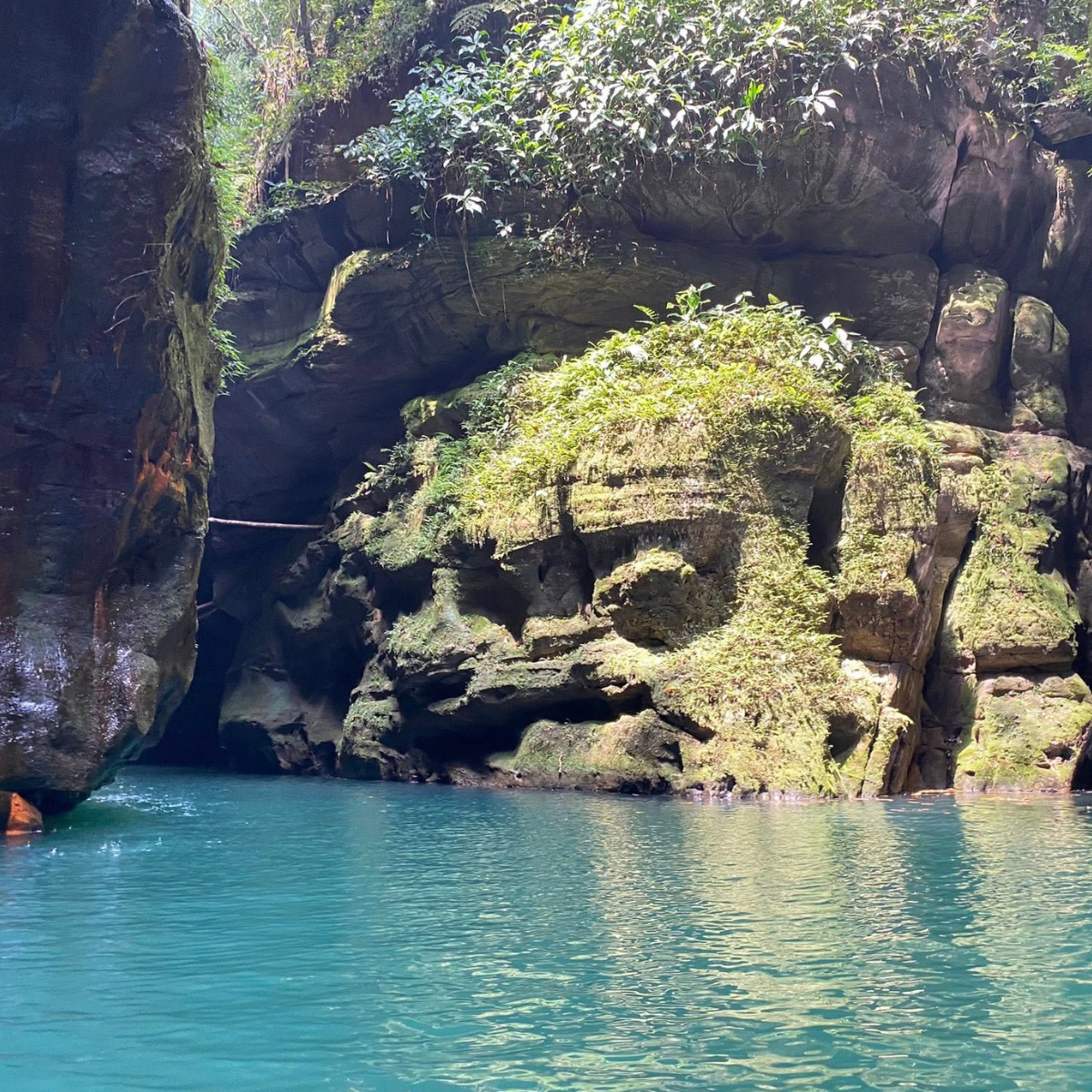
I booked my flight from Delhi to Guwahati with a half-formed idea of a place I had only seen in fragments. Short reels. Perfect frames. A boat slicing through green water as if silence itself had a colour.
That place was Wari Chora.
What those reels didn’t prepare me for was not the distance — but the inner slowing down the journey would demand.
Delhi to Guwahati: When Travel Still Felt Easy
The flight was uneventful in the most familiar way. Airport announcements. Coffee that tasted like every other coffee. Signal everywhere. Comfort everywhere.
I remember scrolling through videos of Wari Chora while waiting at the gate, subconsciously measuring myself against other travellers — their ease, their smiles, their effortless arrival.
I didn’t know then that ease would be the first thing to leave me.
Guwahati to South Garo Hills: Where Doubt Quietly Arrives
From Guwahati, the road slowly bends away from certainty and into the folds of South Garo Hills in Meghalaya.
There’s no dramatic shift — just a gradual thinning of the world.
Villages grow farther apart.
Signboards disappear.
Phone signals die without ceremony.
Hours stretch. Fatigue settles in. And somewhere along the drive, a quiet question surfaces:
Why did I choose this place, alone?
Solo travel has a way of asking questions you can’t escape by talking to someone else.
Where the Road Ends: Learning to Let Go
Wari Chora doesn’t welcome you with a gate or a board.
You simply arrive at a point where vehicles stop. Conversations pause. Locals look at you, not unkindly — just attentively.
From here, control is no longer yours.
You’re given two choices. Neither is convenient. Neither feels Instagram-ready.
Two Ways Forward (Both Demand Something)
1. The Pickup Truck: Raw, Unfiltered Reality
Some travelers take the local pickup trucks — bare, noisy, built for people and supplies, not comfort. Every bump reminds you that this landscape was not shaped for tourism.
There is no romance here — and that honesty matters.
2. The Trek: The Path I Chose
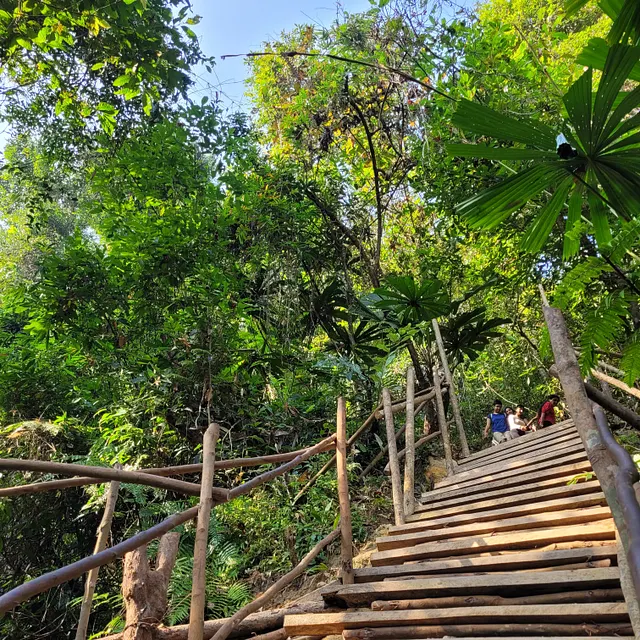
I chose to walk.
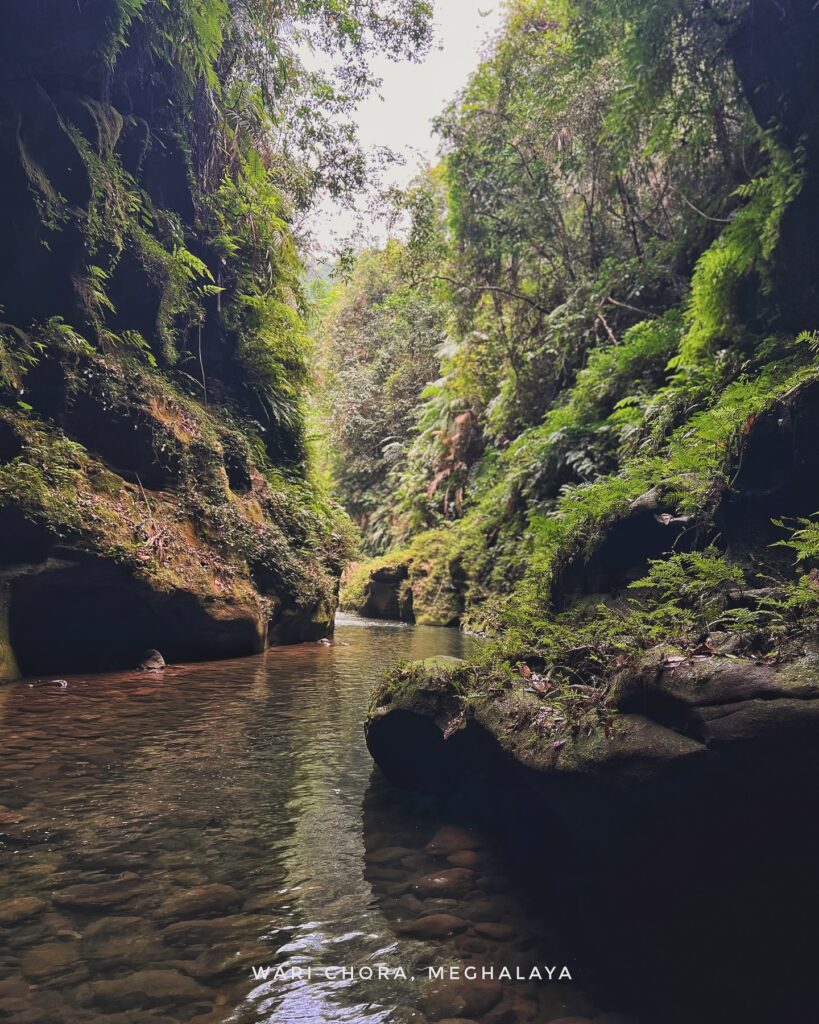
The trek is roughly 1–1.5 km downhill, but numbers don’t tell the truth. The ground is damp. The air is thick. Leaves brush against your legs. Your breath slowly changes.
At first, my mind was busy — thinking about the climb back, the photos, the time.
Then, without warning, it softened.
My steps slowed.
My breath deepened.
My thoughts stopped racing ahead.
This trek doesn’t test your strength.
It tests your willingness to be present.
The First Glimpse: A Quiet That Felt Earned
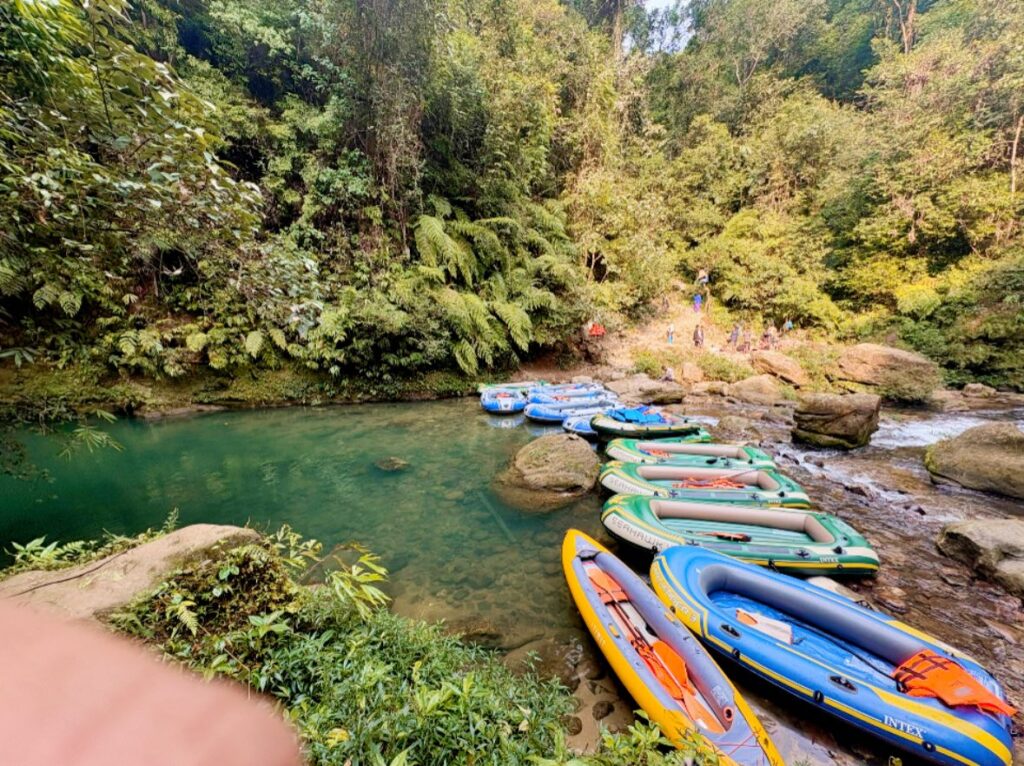
There’s no grand reveal.
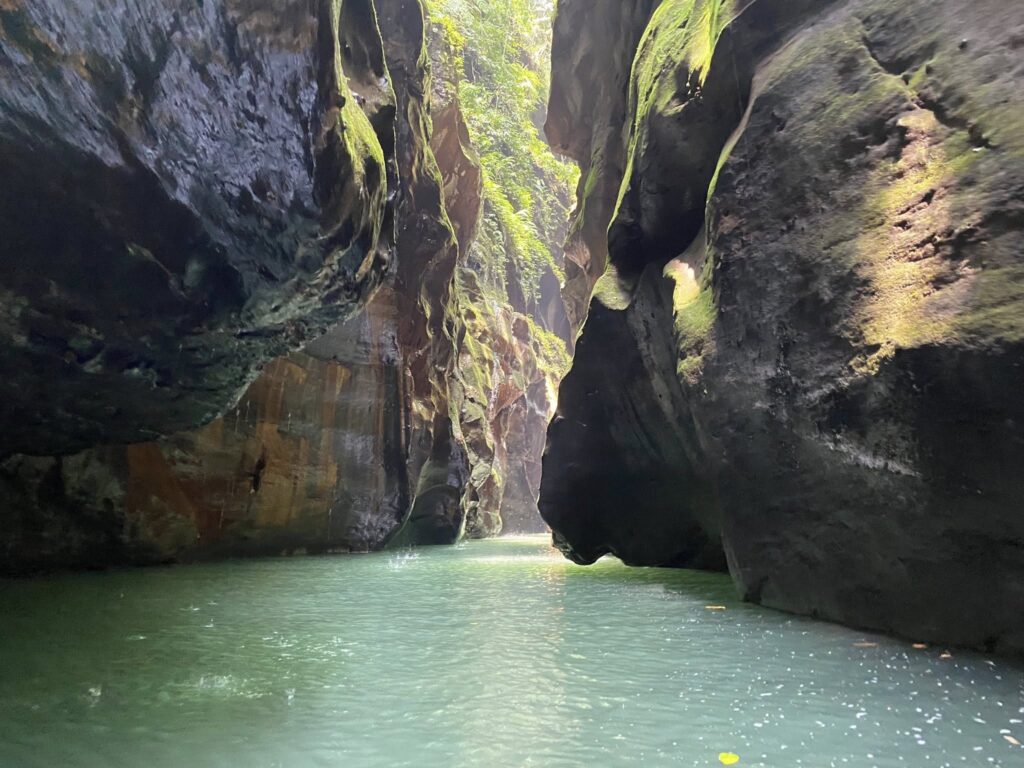
The forest simply opens — and suddenly there is water.
Not blue. Not green. Something in between. A colour that doesn’t demand attention but quietly holds it.
Towering canyon walls rise on either side, as if the river has been protected for centuries. The soundscape changes here. Even voices feel unnecessary.
I didn’t feel excited.
I felt still.
The Boat Ride: What the Reel Can’t Capture
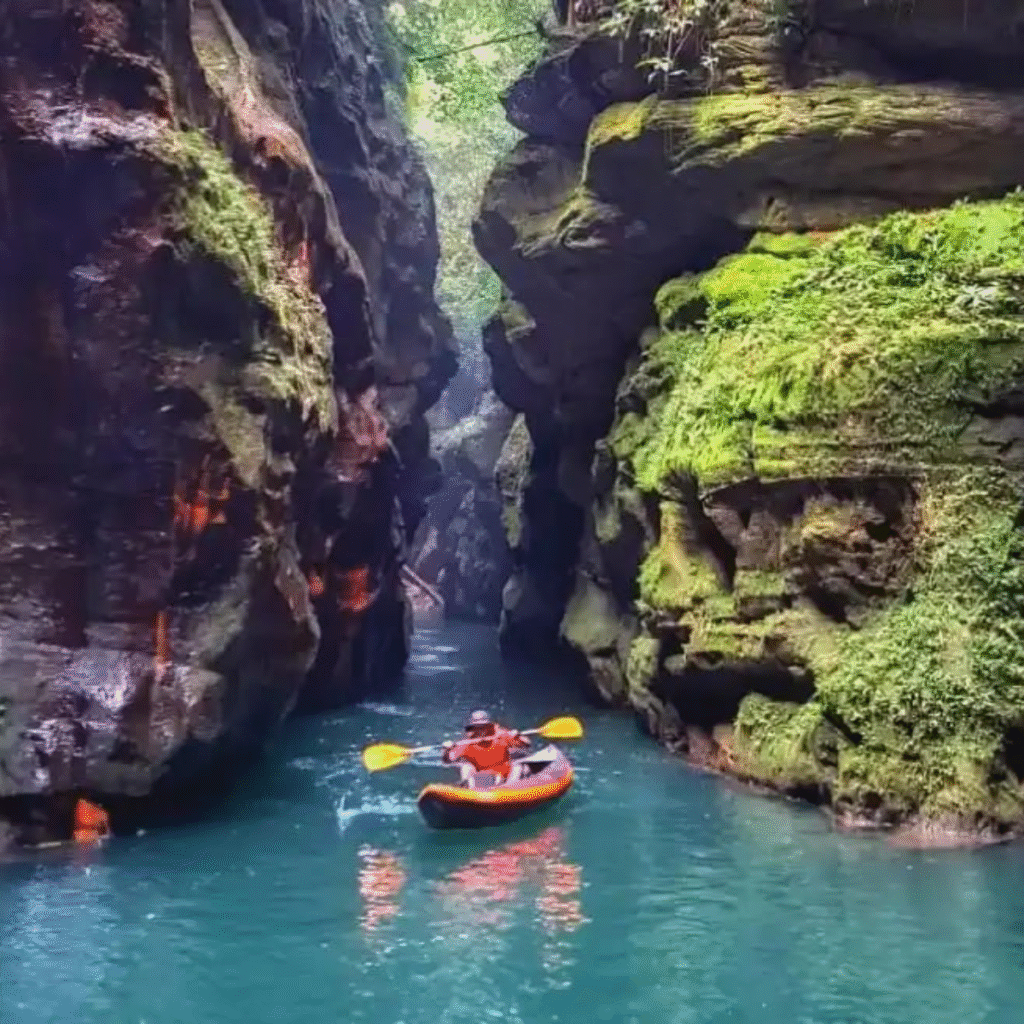
The boat is simple — wooden, low, honest.
You sit carefully. Close to the water. Close to awareness.
As we moved forward, the canyon narrowed. Light shifted. Sound dropped. Even breathing felt louder than it should.
Instagram shows beauty.
It doesn’t show vulnerability.
Here, you are not conquering nature. You are being allowed into it.
And that distinction changes everything.
What I Wore, What I Carried — What Fell Away
I dressed for function, not photos:
- Full-sleeve quick-dry top
- Trekking pants
- Shoes with real grip
- A light jacket
But what surprised me was what I didn’t need:
- Multiple outfits
- Makeup
- The urge to document every second
Wari Chora quietly strips away excess — external and internal.
Food, Fatigue, and Unexpected Gratitude
There are no cafés waiting for you.
Food, when available, is simple. Offered, not advertised. Eaten slowly, without distraction.
I realised how rarely I eat without scrolling, rushing, planning the next thing. Here, hunger was honest. Satisfaction was complete.
The Climb Back: Carrying Silence With Me
The return trek uphill is harder. Legs complain. Breath shortens.
But something inside remains calm.
The canyon’s silence follows you — like a quiet imprint you didn’t know you needed.
What to Know Before You Go (The Reality Check)
What to Wear
- Oct–Mar: Full sleeves, trekking pants, grip shoes, light jacket
- Apr–Jun: Breathable clothes, cap, extra socks
- Monsoon: Not recommended (unsafe trails and river)
What to Carry
- Water + dry snacks
- Cash (no network, no UPI)
- Sunscreen & insect repellent
- Power bank, offline maps
- Small first-aid kit
What to Avoid
- Plastic waste
- Loud music
- Swimming without local permission
- Expecting luxury or speed
- Travelling without a local guide
Who Wari Chora Is (and Isn’t) For
This place is not for:
- Checklist travellers
- Luxury seekers
- Those chasing only content
It is for:
- Slow travellers
- Those comfortable with discomfort
- People willing to arrive without entitlement
Why Wari Chora Stayed With Me
It didn’t thrill me.
It quietened me.
It reminded me that some places don’t want to be famous. They want to be respected.
And maybe — visited only by those willing to listen.
Final Thought
Instagram shows you how Wari Chora looks.
The journey teaches you how to arrive without noise.
And if you let it,
it teaches you how to hear yourself again.
Quick Practical Summary (For Planners)
- Location: South Garo Hills, Meghalaya
- Nearest Airport: Guwahati
- Total Travel Time: ~7–9 hours by road after flight
- Last Stretch: Trek (1–1.5 km) or local pickup truck
- Best Time: October to March
- Network: None
- Difficulty: Moderate
- Facilities: Very basic
Wari Chora is not convenient. And that’s exactly why it matters.